
Empowering Victoria with Renewable Energy Solutions
Pacific Green and Green Switch Energy are committed to collaborating with the local community to realise the Nine Mile Energy Park. This initiative not only enhances grid stability but also paves the way for a sustainable energy future in regional Victoria.
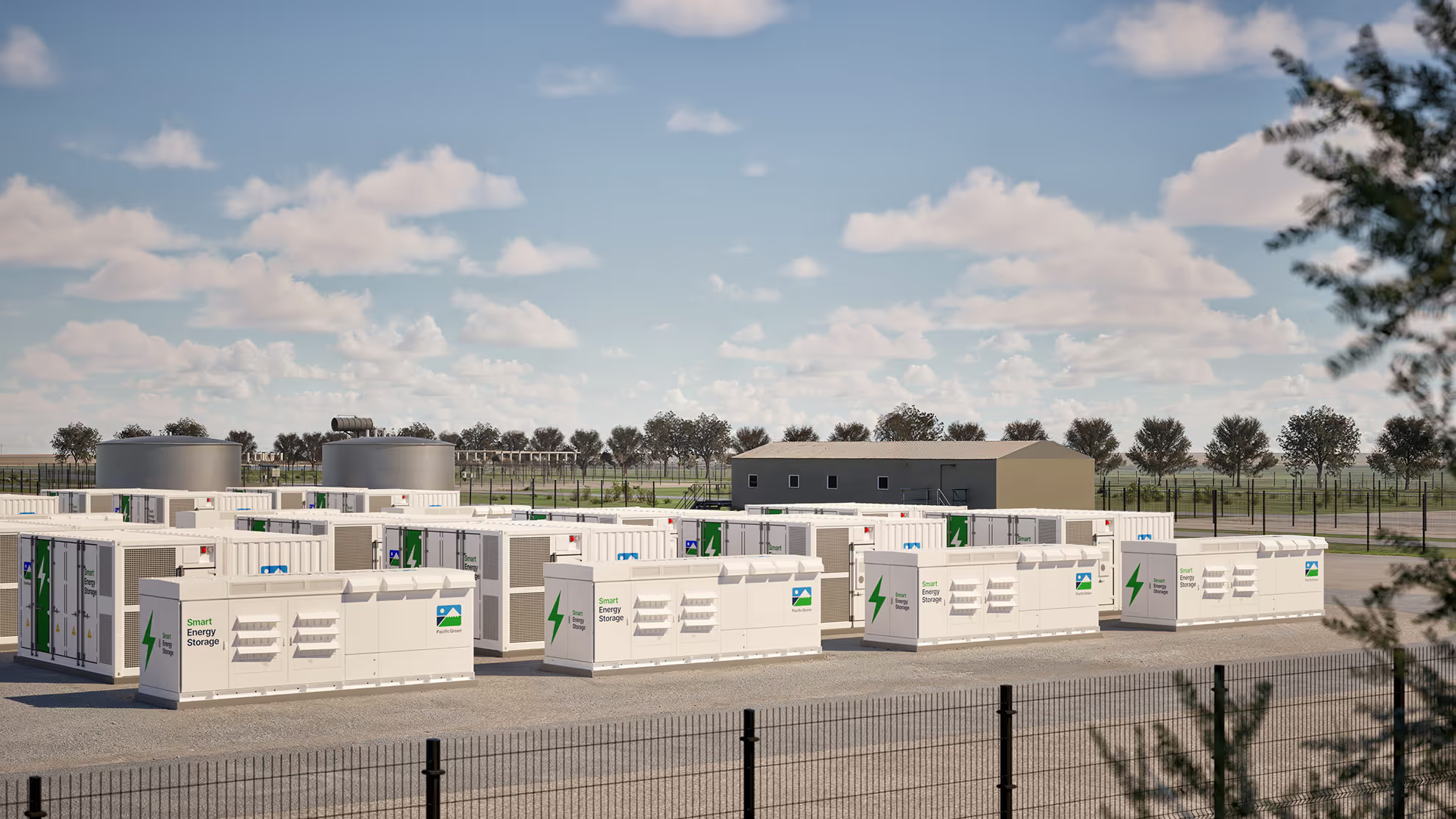
Nine Mile Energy Park
Grid-Scale Battery Energy Project
Pacific Green in partnership with Green Switch Energy are developing the Nine Mile Energy Park which comprises of two grid-scale co-located battery energy storage systems (BESS)
Nine Mile Energy Park (Stage 1)
250MW / 500MWh (2 hour duration)
Nine Mile Energy Park (Stage 2)
250MW / 1000MWh (4 hour duration)

Building Our Energy Future
The Nine Mile Energy Park is currently going through its regulatory approval process. As part of this process, we are seeking to finalise the concept design, informed by preliminary research and technical studies. Pacific Green and Green Switch Energy have completed a range of assessments and studies to ensure the project minimises any impacts during construction and operation.
2024
Site identification & feasibility
2025
Cultural Heritage Engagement
Community & Stakeholder Engagement
Planning & Design
Technical & Ecological Assessments
2026
Equipment Procurement
GPS Approval & Connection Agreement
Construction Commences
2027
Registration
Energisation & Commissioning
2028
Commercial Operation
Technical assessments & Approvals
Large-scale battery energy storage system projects require a planning permit approval. A planning approval determines the appropriateness of the proposed land use and development to its location,considering its context, physical environment and ability to meet other technical criteria.
In Victoria (VIC), a planning application for a renewable energy Project or storage facility that is larger than 1MW is determined by the Department of Transport and Planning. Under VIC’s Development Facilitation Program (DFP), the Minister for Planning will decide whether toissue a development approval. Decisions will be able to be made in as little as four months from formal lodgement of a planning application.
To support this process, a large range of technical, environmental, and operational assessments are undertaken. This will ensure the project minimises and manages any potential impacts and meets or exceeds all statutory requirements.
- Project Approvals
- Cultural Heritage
- Landscape & Visual Impact
- Noise
- Landscape & Visual Impact
- Hydrology
- Boidiversity
- Traffic Impact
- Fire & Safety Management
In addition to the assessments above, Pacific Green and Green Switch Energy have a close working relationship with the Eastern Maar community to ensure successful management of Cultural Heritage elements. We value this relationship and look forward to our ongoing discussions.
In addition to securing Project approval, the Project must also obtain a grid connection agreement from the transmission network operator, AusNet. This agreement must be approved by the grid manager and regulator, AEMO.
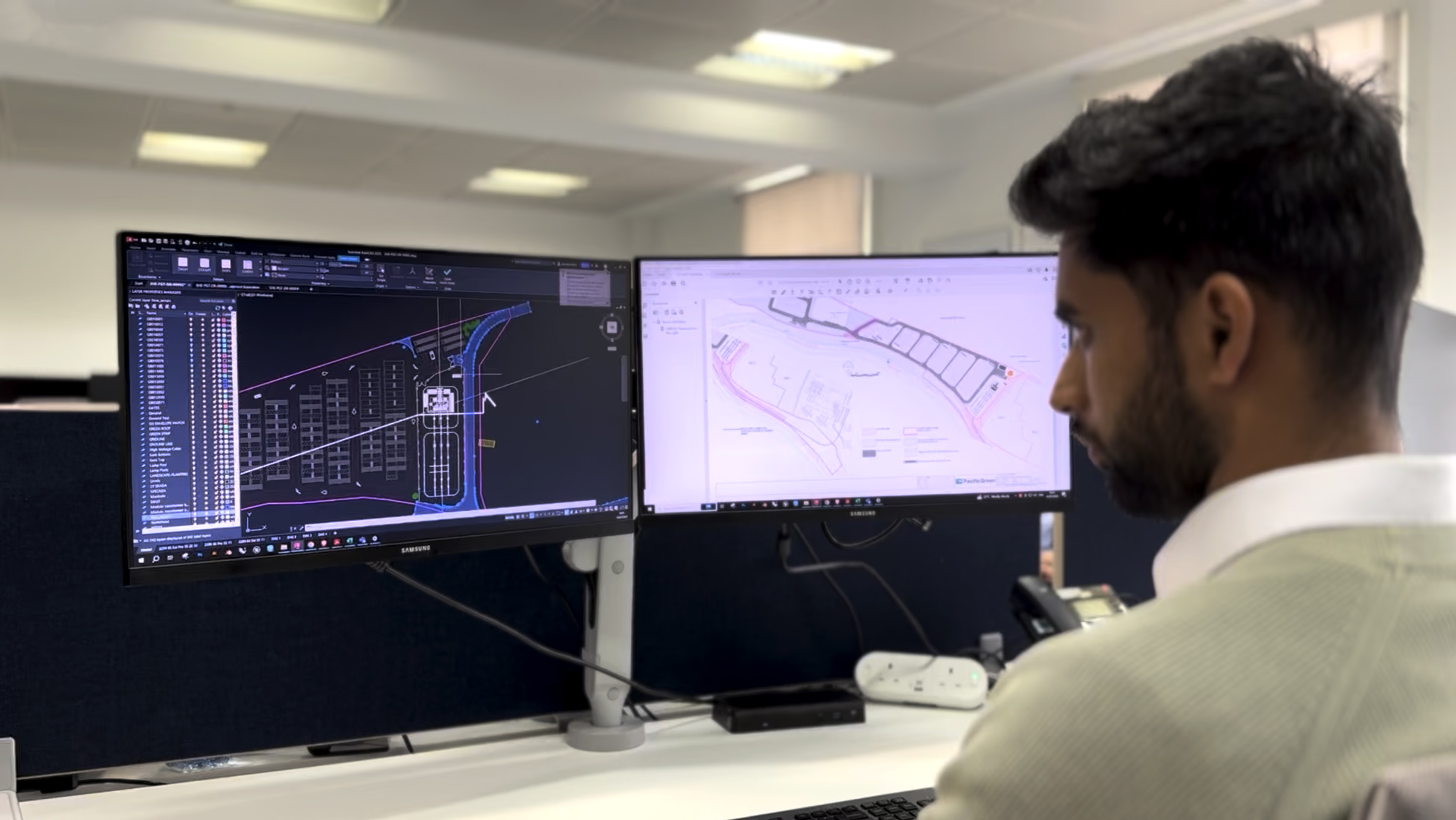
Community and stakeholder consultation and engagement
Pacific Green and Green Switch Energy are dedicated to creating a cleaner environment for our communities. We do this by delivering innovative energy storage solutions that enable Australia’s net-zero transition. Our presence in regions extends beyond the provision of clean energy solutions. We partner with communities where we deliver projects and support initiatives to develop wider social value creation beyond our core business.

Our committment to you
Our relationships within communities commence from the early stages of a project through to construction and operations.
From the outset we establish open, transparent and collaborative two-way conversations that ensure we are on the ground early to share our project plans, respond to questions and hear ideas the community might have to shape project design.
Every community is different, and we value the time people take to engage with us as it helps us shape our projects in a way that suits the differing environments we operate in.
Community Engagement Opportunities
We are committed to providing clear, accessible information and inviting community input at every stage of the project. Our goal is to build respectful, transparent and lasting relationships with stakeholders, including Council, neighbouring landowners and the broader community.
Residents living near the project site will be kept informed of key milestones, and Pacific Green and Green Switch Energy will make every effort to share updates as our plans progress. We want to ensure that everyone has the opportunity to talk with us, ask questions, and provide feedback throughout the development process.
Over the coming months, our engagement activities will include:
- Delivering letters to nearby landowners, followed by one-on-one conversations
- Providing email updates to our stakeholder database throughout the planning process
- Holding briefings for a range of groups, including the Golden Plains Shire Council
- Launching a community feedback survey to capture your thoughts on key issues
- Hosting information sessions for interested community members (details to come)
We welcome the chance to meet with you and discuss the project in more detail. If you would like to arrange a conversation, please contact us using the contact form. We can meet in person at your residence, at a neutral location, or online, whichever option works best for you.

Pacific Green and Green Switch Energy's Community Benefit Fund
Pacific Green and Green Switch Energy take pride in becoming part of communities in which we operate. As we expand our business across Australia, we will be searching for investment and partnership opportunities with value aligned community groups and organisations. Our aim is to create social value and build stronger communities, right across Australia. Through our Community Benefit Fund, we aim to enrich the quality of life for Australians both locally and internationally, across key focus areas.
Pacific Green and Green Switch Energy work closely with each community through our comprehensive community and stakeholder engagement programs. This ensures that we develop two-way, long-lasting relationships that foster a tailored approach to each region’s Community Benefit Fund. This in turn plays a vital role in supporting the development and success of the communities in which we operate, helping to create more meaningful, inclusive, and sustainable outcomes.
We would love to hear your ideas on how to share project benefits locally, so if you have any suggestions on initiatives or programs that would support the local community, please reach out.

Pacific Green and Green Switch Energy are committed to sustainably contributing to local employment and training while ensuring high labour standards.
During construction of our projects, employment opportunities naturally peak and at these times our approach is to maximise local direct employment and training opportunities. We prioritise hiring from within the local community to support regional economic development and growth. Our future initiatives will look to supporting local apprenticeships and education initiatives to support career progression in the renewable energy sector.
The safety of our employees and the communities in which we operate takes precedence in all we do.
In addition to first-class technical engineering that’s designed to meet International Electrotechnical Commission (IEC) and Australian standards, all Pacific Green energy storage projects undergo rigorous safety and security testing to minimise safety risks.
The Nine Mile Energy Park will come equipped with the latest lithium-ion battery technology incorporating several integrated fire safety measures. This will include both external monitoring and heat sensors as well as individual units within each battery container that are sealed and monitored with their own fire suppression systems. This means that if a single cell fails, this section of the battery is isolated and contained, thus protecting the rest of the container unit.
A Bushfire Management Plan (BMP) is specifically designed to over-see the operations of the Nine Mile Energy Park. The facility will also have a Risk Management Plan, Fire Management Plan and Emergency Management Plan with details on potential risk areas and mitigation measures in place.
The battery has an initial lifespan of 20 years but new generation cell technology will provide longer lifespan, so that the site can be renewed and enhanced continually, making the project sustainable into the future.
Community Feedback Survey
We understand that not everyone prefers the same way of sharing their views, so we're offering a range of opportunities for you to have your say. Your feedback is important to us and will help shape the project as it progresses. We welcome input from all members of the community and will continue to offer flexible ways for you to share your thoughts throughout the project.
We encourage you to complete the community feedback survey using the QR code or by clicking the link below.

Frequently Asked Questions
We’ve answered some of the most common questions from the community to help you better understand how battery energy storage works and what it means for your area.
Battery Energy Storage System Overview
A Battery Energy Storage System (BESS) is a large-scale energy storage facility that stores and releases energy to the electricity grid. A BESS comprises several "enclosures" or battery units (broadly resembling a shipping container), inverters, transformers and other electrical equipment. A BESS site usually also includes access tracks, water tanks, site offices, amenities, landscape screening and security fencing.
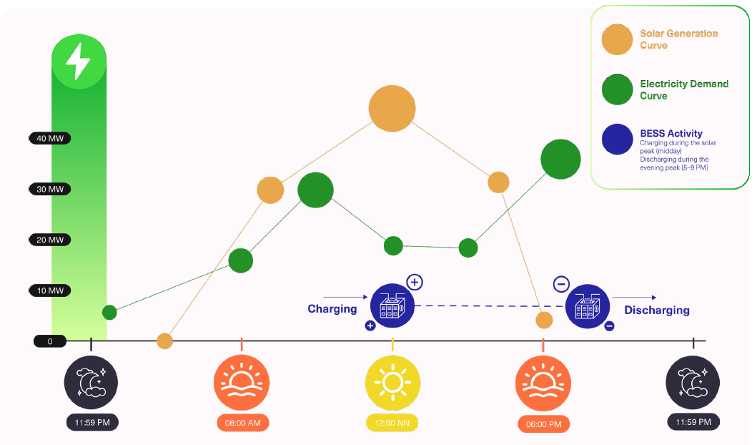
Battery Energy Storage Systems (BESS) play a crucial role in maintaining the safe, reliable, and secure operation of Australia’s National Electricity Market. They provide fast, dispatchable energy that helps keep the electricity grid stable. A BESS stores electricity when there is excess generation. For example, during the middle of the day when solar production is high and releases that energy when demand increases, such as in the early evening, this makes renewable energy sources like wind and solar more consistent and reliable.
Renewable energy is cheaper than new fossil fuel plants, cleaner to produce, and contributes far less to climate change. However, renewable generation is variable. The sun doesn’t shine at night, and the wind isn’t always blowing, while electricity demand also fluctuates throughout the day. For example, electricity use typically peaks in the early morning and again in the late afternoon and evening. During the middle of the day, demand drops, often at the same time solar generation is at its highest. This mismatch between when energy is produced and when it’s needed is one of the main challenges in a renewable-powered grid.
This is where a BESS comes in. It bridges the gap between supply and demand, storing excess energy when supply is high and delivering energy when demand exceeds available generation. In doing so, BESS helps make better use of renewable energy and supports a more stable, flexible electricity system
Victoria has committed to increasing its share of renewable energy to over 65% by 2030 and 95% by 2035. This transition is expected to generate around $9.5 billion in economic activity, create 59,000 jobs, reduce average annual energy bills by $110 for households and $3,700 for businesses, and cut carbon emissions by approximately 55 million tonnes (Department of Energy, Environment and Climate Change, 2024). At present, Victoria’s renewable energy share is 37.8%.
As we move away from aging thermal coal fired power stations to renewable energy, this kind of technology is an important part of helping stabilise the grid as our state and national energy infrastructure undergoes significant change.
In many ways the modern Battery Energy Storage System is a contemporary use of technology to store excess renewable energy in the same way as the off peak hot water storage technology of the 1960’s and 1970’s was used to store excess energy over night from thermal coal fired power stations.
The design is still to be finalised; but lithium-ion is the preferred electrical storage technology because it is cost-effective and a proven technology which is readily available for utility broad scale deployment. During detailed design, the Original Equipment Manufacturer (battery supplier) will be confirmed through commercial tendering and procurement processes to ensure the Project is optimised in terms of yield and efficiency, within the parameters of any planning approval.
This proven BESS technology is already in use across Victoria and throughout Australia.
Utility-scale batteries are specifically engineered for long-term safety and reliability. Unlike mobile device batteries, which are designed to be lightweight and compact, utility-scale batteries are built for stability and long life.
In comparison, phone and tablet batteries are typically designed to last 2 to 3 years, or around 300 to 500 full charge cycles, before their performance starts to noticeably drop. This is because they’re built for portability, not long-term use. They are also more likely to wear out quickly due to constant use, frequent fast charging, and exposure to changing temperatures and humidity.
Unlike utility-scale systems, these devices don’t have active systems to manage their environment, so the batteries are more affected by everyday conditions like heat, cold, and moisture. All of this shortens their life considerably.
This Project, in comparison, is proposed for long term use. Each battery unit will have a life of up to 20 years. Battery units will be replaced as and when they become life expired. The units themselves are containerised making them easy to swap over individual components when they have reached the end of their life. A life expired unit can be processed by specialist recyclers to recover reusable components and raw materials.
The batteries are housed in secure, climate-controlled containers and are monitored constantly by systems that regulate heat, voltage, and other conditions to ensure safe operation. These safety measures significantly reduce the risk of overheating or fire. They are widely recognised for being one of the safest and most stable types of battery technology available. Please see fire management FAQs for more information regarding fire management.
Environmental Impact
The site was selected following careful consideration of planning, environmental, community, grid and commercial criteria. The site was selected for the following reasons:
- Proximity to a suitable grid connection at Cressy Terminal Station
- Suitable planning context
- Low potential impacts to biodiversity and heritage
- The relatively small development footprint
- Low land use conflict.
- Low potential for noise affecting neighbour
- Low potential for visual impact
A BESS requires a connection to the electricity grid, which is most efficiently made through existing grid substations. For this reason, BESS facilities are typically located close to these substations.
Once operational, the BESS may generate some noise depending on its mode of operation and the surrounding temperature. The main sources of noise include the inverter station, transformers, and cooling fans that regulate the battery temperature. The cooling fans typically produce a low whirring sound, similar to an air conditioning unit. While this noise can be heard when close to the facility, it quickly diminishes and becomes negligible at a distance.
However, the design will incorporate noise-reducing measures such as containerised inverter units and the potential use of acoustic barriers. These measures ensure compliance with the Victorian Environment Protection Authority’s Noise Protocol. [SG2] [BS3] [AM4] [FC5]
Due to the site’s location and the intended application of conservative mitigation strategies, operational noise is not expected to be audible to nearby residents. Noise levels will also naturally reduce with distance from the source.
Detailed noise assessments are underway to evaluate potential impacts and confirm appropriate mitigation where required.
Inevitably, the installation of a BESS will have some effect on the current look of the landscape, though the BESS cubicles are unlikely to emit glare or reflection. The Development Application process consists of independent technical assessments, and visual impact will be assessed as part of this. If required, BESS facilities can be screened (by either vegetative or artificial means) to minimise any potential visual impacts.
The Proponent is committed to working closely with the local community to address any concerns and encourages the community to approach them with any issues that may arise.
The construction start date depends on several factors, including development approvals, selecting a construction contractor, obtaining grid connection approvals, negotiating a Power Purchase Agreement (PPA), and completing the financial close process. Currently, construction is expected to begin no earlier than late 2026.
Once contractors are appointed, construction on site is anticipated to take approximately 12 to 18 months. The most intensive phase will be when the battery units are delivered and installed. During this time, we will work closely with the community to manage traffic and minimise disruption. We will keep the community updated as we progress toward construction.
Appropriate traffic management plans will be in place during the construction period and residents will be notified ahead of time should there be any essential works/periods where access may impact traffic flow.
Should the Project be approved, the delivery of materials and equipment will be from the Hamilton Highway and east along Cressy-Shelford Road, returning by this same route.
The remaining land will continue to be used for farming by the landowner. Currently, 100% of the land is used for agriculture. Since the BESS will occupy only 1% of the property, the other 99% will remain in farming use with no change to it.
Technical
BESS’s are container-like modular systems, similar to shipping containers, grouped with multiple inverter stations that are configured based on site and capacity obligations. . [SG6] [BS7] [AM8] [SG9] The containerised form of the BESS will decrease installation and maintenance duration, enhance the electrical and environmental safety of the entire plant, and minimise the impact on the original landscape. As technology improves, the systems are becoming increasingly efficient and more compact.
The Project would include the following key built form features:
- BESS including battery enclosures, inverters, transformers, switchgear and control room
- Onsite substation including transformer switch bays and switchgear housed in portable substation containers
- Connection to the existing nearby substation
- Permanent office, operation and maintenance (O&M) buildings, hardstands and Project signage
- Site access to the BESS from Cressy-Shelford Road, internal site access tracks and parking
- Stormwater management infrastructure, lighting, fencing and security
The design is still to be finalised; but lithium-ion is the preferred electrical storage technology because it is cost-effective and a proven technology which is readily available for broad scale deployment at the site.
During detailed design, the Original Equipment Manufacturer (battery supplier) will be confirmed through commercial tendering and procurement processes to ensure the Project is optimised in terms of yield and efficiency, within the parameters of the approval.
BESS units will be installed on low-lying structures and are expected to not exceed 3 m [SG12] [BS13] above the natural ground level. It is expected that the Project area will be at the same height or lower than other existing features in the landscape.
No, the BESS will not be brightly lit at night. Lighting will be limited to essential safety and security purposes, withno continuous or high-intensity illumination planned. Temporary lighting may beused during construction if required for safety, but this will be assessed on acase-by-case basis.
In general, BESS facilities are designed to minimise light pollution. They typically use shielded, downward-facing fixtures along with motion sensors and timers to reduce unnecessary lighting. Higher levels of lighting are only used in response to security incidents or inremote locations where there is no impact on nearby residents. These design measures help protect the night-time environment and limit disturbance.
There will be no outages expected during the construction phase. Once the BESS is built and operational, it will increase the grid stability.
Risk Management
EMFs (electro-magnetic fields) are naturally present in the environment. They are present in the earth’s atmosphere as electric fields, while static magnetic fields are created by the earth’s core. EMF are also produced wherever electricity or electrical equipment is in use (e.g. household appliances like fridges, and powerlines).
The use of electricity in daily life exposes us to low frequency EMF and are not considered a risk to human health (ARPANSA,n.d). Your kitchen stove has an EMF range of 2-30 milligauss (mG) and your hairdryer 1-70mG. Standing at the edge of a transmission powerline easement would be in the range of 10-50mG, and under a transmission powerline 20-200mG.
The current international standard for human exposure to limit EMF set up the International Commission of Non-Ionizing Radiation Protection (ICNIRP) is 2000mG (EnergyCo,2022). EMFs from a BESS are typically less than household appliances and are not distinguishable from background levels at the site boundary.
Technical and engineering experts, including the Australian Radiation Protection and the Nuclear Safety Agency (ARPANSA) have found no known or documented electromagnetic radiation impacts associated with big batteries.
Fire safety will be a central consideration in the design of the Project. Key safety features include adequate spacing between units and installation on gravel surfaces to reduce fuel loads and minimise the risk of fire spread.
Equipment such as heating ventilation and air conditioning will safely maintain temperature conditions within BESS enclosures, including during high temperature conditions. Continuous remote monitoring of the battery performance will detect and respond to any abnormal conditions, with the ability to isolate and shutdown any batteries well before the risk of fire.
Asset protection zones and perimeter roads, in accordance with CFA design guidelines and model requirements for renewable energy facilities, will be incorporated into the design. These and other mitigation measures aim to reduce the potential for fires to enter or leave the development.
In line with best practice for fire management relating to a BESS, the recommended response in the highly unlikely event of a battery fire is a controlled, non-intervention approach. Emergency service personnel will be on-site and on standby during this event, allowing the affected unit to burn out under supervision while ensuring the fire does not spread to adjacent equipment (including adjoining batteries) or surroundings.
It is important to note that such scenarios are extremely rare, and the Project incorporates multiple layers of safety to prevent and contain any such event. The likelihood of fires starting from other development types within the region (such as residential, commercial, agriculture, fuel and transport) far exceeds the potential associated with a BESS development.
The Proponent will work closely with the CFA and other relevant authorities, who play a central role in reviewing and approving the Fire Safety Study and emergency response plans.
BESS’s are engineered with multiple layers of protection to prevent and manage chemical spills. Each unit includes internal bunding (a built-in containment system) designed to capture and isolate any potential leaks. Containers are sealed at the base, and many systems include liquid-cooled bottom plates to further reduce the risk of leaks.
In the unlikely event of a fire, BESS are equipped with advanced detection systems (such as heat and gas sensors) that can automatically shut down the system before ignition occurs. The CFA does not use water to extinguish battery fires, helping prevent contaminated runoff from entering nearby soil or waterways.
In addition to physical design features, BESS operations are monitored and controlled by systems such as SCADA (Supervisory Control and Data Acquisition) and BMS (Battery Management System), which play a key role in identifying and managing chemical hazards. An Environmental Management Strategy will also be in place to guide safe handling, containment, and emergency response procedures.
Site-specific design measures, such as appropriate drainage systems and hydrology reviews, will ensure any accidental release is contained and does not leave the site.
A known concern for many surrounds air quality, particularly the potential release of toxic pollutants during a battery fire and the possible health impacts on nearby residents and first responders.
A well-known example is the 2021 fire at the Victorian Big Battery in Geelong. The fire began in one unit containing lithium-ion cells and spread to a neighbouring unit during installation and commissioning. Unit 1 had been manually shut down earlier that morning with no abnormal signs. Smoke was later observed, prompting the isolation of all Units and a call to emergency services. The fire was contained to the two units and burned out over six hours without any injuries or explosions. The Proponent does not intend to utilise this manufacturer’s technology for the project.
To assess any community impact, EPA Victoria deployed two mobile air quality monitors within 2 km of the site in locations where community exposure was most likely. Key pollutants measured included hydrogen fluoride, carbon monoxide, particulate matter, and volatile organic compounds. These substances can pose health risks under certain conditions. However, the EPA confirmed that air quality in the local area remained good throughout the incident, and there were no lasting environmental impacts or health issues reported (Fisher Engineering, 2022).
These findings indicate that, even in the rare event of a battery fire, the impact on air quality is unlikely to pose a significant risk to the health of the community or emergency responders, provided the incident is managed properly. Insights gained from this event have been incorporated into the PHA report.
Nevertheless, despite the very low fire risk, any potential effects from smoke or fumes will be thoroughly assessed in a Fire Safety Study during the post-approval phase. This study will include the identification and application of mitigation measures to manage any potential impacts.
Comprehensive assessments are currently being undertaken to evaluate whether the site is susceptible to flooding. These assessments include traffic and hydrology investigations as part of the development application process, which will confirm the suitability of the access road under heavy rainfall conditions.
The Proponent is collaborating closely with technical experts to ensure that any potential impacts on neighbouring properties are minimised. While the likelihood of significant stormwater flooding is low, the design of the BESS will incorporate measures to ensure its infrastructure remains stable and secure.
Social & Economic
Based on available information, there is no indication that the development of energy infrastructure will have a direct impact on neighbouring insurance premiums. As confirmed by the Insurance Council (May 2024), there have been no reported cases where their members have denied coverage or increased premiums solely due to the presence of energy infrastructure on a property or nearby.
The Clean Energy Council similarly highlights that any adjustments to insurance premiums are unlikely to be directly tied to clean energy developments. Instead, rising insurance costs are largely driven by broader factors, including the escalating frequency and costs of natural disasters, inflation affecting building and vehicle repair expenses, the increasing value of homes and vehicles, and higher operational costs for insurers.
As grid-scale battery Projects are relatively new in Australia, there is limited evidence to suggest any changes to property values or impacts on future land use opportunities.
The Project will be designed to align with the mitigation measures recommended by various technical assessments, such as the LVIA and Noise Impact Assessment (NIA).
The LVIA developed for the Project will assess visual impacts to private receivers and public viewpoint in accordance with relevant VIC visual impact guidelines. Similarly, the NIA will include construction and operational noise modelling to estimate potential noise impacts associated with the Project. Construction and operational noise are predicted to comply with all relevant noise criteria, due to the scale of the Project and distance from receivers.
Nonetheless, the Proponent remains committed to minimising potential impacts that could influence property perceptions.
The BESS would operate 24 hours a day, seven days a week and be monitored remotely (including CCTV), with infrastructure maintenance undertaken on-site. An operational and maintenance (O&M) contractor would be employed to operate the Project (including maintenance, repair, troubleshooting, and monitoring).
Decommissioning
The operational life of the Project is expected up to 30 years with refurbishment and repowering extending project life to 50 years consistent with the expected life span of the nearby Cressy Terminal Station. Once the BESS reaches its end of life, it will be decommissioned, and the land will return to its original condition, or reenergised. This will involve removing the BESS and related infrastructure and restoring the site. The decommissioning requirements will be set out within contracts with the landowner and within the approvals process.
At the end of the BESS’s useful life, the Project will be fully decommissioned. This will include:
- Removal of all above-ground, non-operational equipment
- Removal of any underground equipment buried at a depth shallower than 0.5 meters; and
- Cleanup of any residual contamination
During decommissioning, the Proponent will assess options for repurposing the facility, re-using equipment, and recycling materials wherever possible. Any materials that cannot be re-used or recycled will be classified according to relevant guidelines and disposed of at an appropriate facility.
Yes, lithium-ion batteries used in BESS’s are highly recyclable. Up to 95% of valuable materials such as lithium, nickel, cobalt, copper, aluminium, and iron can be recovered through specialised recycling processes.
In Australia, the battery recycling industry is growing rapidly. While current national recycling rates for lithium-ion batteries are still low (around 10%), this figure includes smaller consumer batteries. Larger BESS units offer significantly greater recycling value due to their size, concentrated material content, and ease of disassembly.
Organisations like CSIRO are leading research into battery recycling technologies, and government-backed programs such as B-cycle are supporting safe collection and processing. As of 2024, ten accredited and EPA-licensed recyclers are actively handling mixed battery waste across the country.
Manufacturers, are also adopting take-back schemes for end-of-life systems, helping close the loop and reduce waste. With more utility-scale BESS expected to reach the end of life in coming years, continued investment in recycling infrastructure will be key to building a more sustainable and circular battery economy in Australia.
Contact us
Please use the form below if you would like to reach out by email.
Office
About Pacific Green
Pacific Green is a global leader in renewable energy and infrastructure, supported by a strong local team of experienced Australian energy professionals. With a project pipeline of 14.0 GWh planned for construction over the next four years, Pacific Green is focused on delivering clean energy that benefits local communities and economies.
Rather than relying on off-the-shelf solutions, Pacific Green partners directly with manufacturers to develop tailored technologies, ensuring reliable and timely equipment delivery, even under challenging global supply conditions.
About Green Switch Energy
Green Switch Energy is a renewable energy company specialising in large-scale solar and battery storage projects. Operating since 2015, the company builds on more than 20 years of international experience across the UK, Europe, Africa, and Australia.
Green Switch has delivered solar PV solutions across utility-scale, commercial, industrial, agricultural, and residential sectors. Its team brings expertise in the full lifecycle of renewable energy projects, from development, construction, funding, ownership, and operations. The company’s leadership has been involved in over 200 renewable energy projects, delivering more than 2.0 GW of solar power in the last nine years, representing over $5 billion in investment.